Planning
Choosing a wedding venue near Stuttgart: what a DJ checks
Capacity, dance floor, power, acoustics and closing times shape the evening long before the decor goes up. This guide collects the eight criteria a DJ actually checks at a wedding venue in the Stuttgart region, plus a question list for the viewing. No specific hall is recommended, on purpose.
By DJ VeysPublished on August 23, 20265 min read
Photo coming soon
Why no single venue is recommended here
This article deliberately names no venue — not as a recommendation, not as a warning. There is a straightforward reason for that: no partnership with any hall is claimed here, and a room that is exactly right for one wedding can be the wrong one for the next. What can honestly be passed on are the criteria that apply regardless of the building. Twelve years and more than 200 events have turned those into a checklist that can be worked through in about twenty minutes during a viewing.
Capacity is not the same as dance floor
The number in the brochure describes how many people fit into the room seated — not how many can dance at the same time. Two other measurements decide that: the floor area that genuinely stays free once all the tables are in place, and where that area sits. A dance floor at the far end of a long hall pulls the evening apart, because the back tables are cut off both acoustically and visually. A central area with tables around it holds the celebration together. So ask to see the seating plan for your own guest count, and never judge an empty room.
Acoustics: ceiling height, glass, hard surfaces
High ceilings, large glass fronts and bare walls produce reverb that equipment can only correct so far — turning the volume up makes it worse, not better. Curtains, carpet, wood and a full room absorb it. There is a dedicated article on the detail in this guide: "Venue acoustics: what to check during a viewing". At the venue-selection stage a rough test is enough — clap once and listen to how long the room rings.
Power: the point most often underestimated
Sound, lighting, haze, the kitchen and the coffee machines run off the same circuit in plenty of buildings. When a fuse trips, it is almost never the kitchen that goes quiet. So the thing to establish is: how many separate circuits are available on the stage side, at what rating, and can one of them be reserved exclusively for the technical setup? The caretaker or building technician answers this reliably; the letting office often cannot.
Load-in, routes and where the equipment stands
How far is it from the car park to the door, are there steps, is there a lift, are the doors wide enough — and is stopping near the entrance permitted during setup and teardown? With DJ Veys the sound and lighting equipment, including setup and teardown, is part of the booking, but the rental agreement has to allow the time that takes. For the stand position itself the rule is simple: a clear sightline to the dance floor, a socket nearby, and no cable runs crossing escape routes or guest walkways.
Closing times and noise rules — indoors and outdoors are separate questions
Indoor and outdoor areas are usually governed by different rules, and the decisive clauses sit in the rental agreement rather than in any statute. The questions to ask: how late may the celebration run indoors, from when does quiet apply outside, is a volume limiter installed, and who in the building decides on exceptions? The legal framework is covered in detail in the article "Noise protection and closing times in Baden-Württemberg".
In-house system or bringing your own
This is where two types of building diverge. Community and village halls often come with a basic sound system that is fine for speeches and not for a dance floor. Larger hotel ballrooms frequently have a permanently installed system — and sometimes a contractual condition that this specific system must be used. So the question is not "is there equipment", but: may our own equipment be operated, and if so, from which connection point?
Catering timing
The transition from dinner to the dance floor is the most delicate moment of the evening. If dessert arrives while the music is ramping up, you lose both. It is worth clarifying at the viewing whether the kitchen works to fixed service times or stays flexible, and whether any coordination between service and music is foreseen. A venue that answers this routinely has solved it many times before.
What changes for large Turkish weddings
At Turkish and German-Turkish celebrations several criteria shift noticeably. Halay is danced in a circle or a chain, and a chain grows outwards — it needs one continuous area with no pillar, step or platform in the middle of it. The couple's entrance needs a clear route from the door to the floor; where live elements are involved, further people use that same route, which has to be accounted for in the seating plan and coordinated in advance. And because several generations celebrate at once, the balance between seating and dance floor matters: older relatives want to see what is happening, but not sit directly beside a speaker. A room that allows both is worth more than a handsomer hall that does not.
The question list for the viewing
| Topic | Question for the venue |
|---|---|
| Floor area | What does the seating plan look like for our guest count, and how much dance floor is left? |
| Power | How many separate circuits are there on the stage side? |
| Equipment | May our own sound and lighting equipment be operated? |
| Volume | Is a limiter installed, and at what level? |
| Times | How late indoors, how late outdoors? |
| Setup | From what time is access for setup possible? |
| Load-in | Steps, lift, door widths, stopping at the entrance? |
| Catering | Fixed service times, or coordinated with the running order? |
Settling these eight points in writing before signing costs one email and removes most of the improvisation from the wedding day itself.
Conclusion
A venue is rarely chosen for its technical qualities, and rightly so — the first impression, the location and the feeling come first for good reason. But the technical criteria are the ones that cannot be changed later, which is exactly why they belong in the viewing rather than in the week before the celebration. Couples who already have a room in mind can simply go through the list during the planning call; the city pages for Esslingen, Ludwigsburg and Heilbronn and the Baden-Württemberg overview show where travel and local knowledge are already in place — travel within 50 kilometres of Stuttgart is included. Enquiries sent through the enquiry page are usually answered within 24 hours.
Further reading
Related answers
You might also like
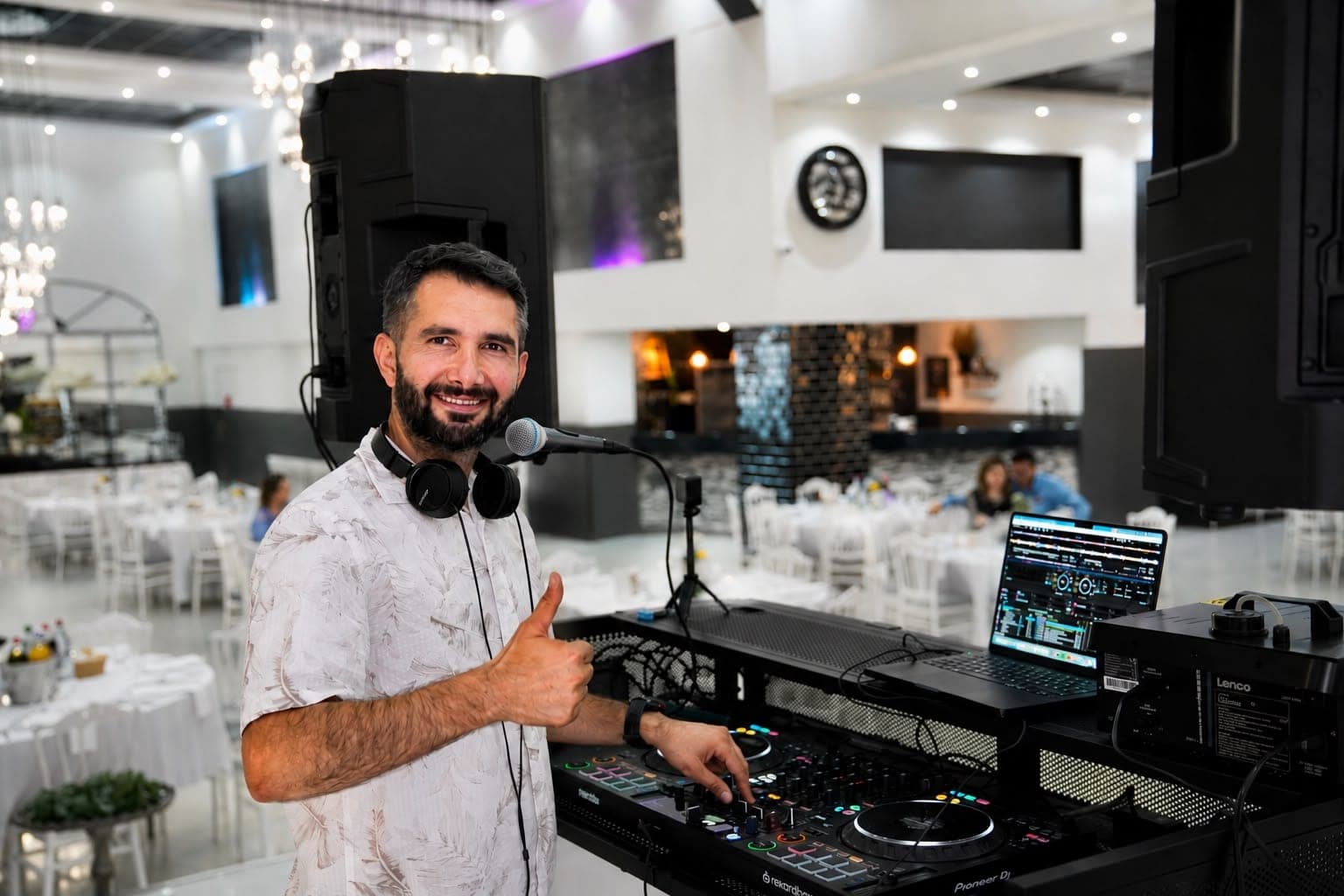
Technology
Venue acoustics: what to check during a viewing
Acoustics shape the sound of the evening far more than any equipment alone — and are almost never actively checked during venue viewings. This guide offers a checklist, the simple clap test, and why an empty room sounds misleading.
September 15, 20266 min read
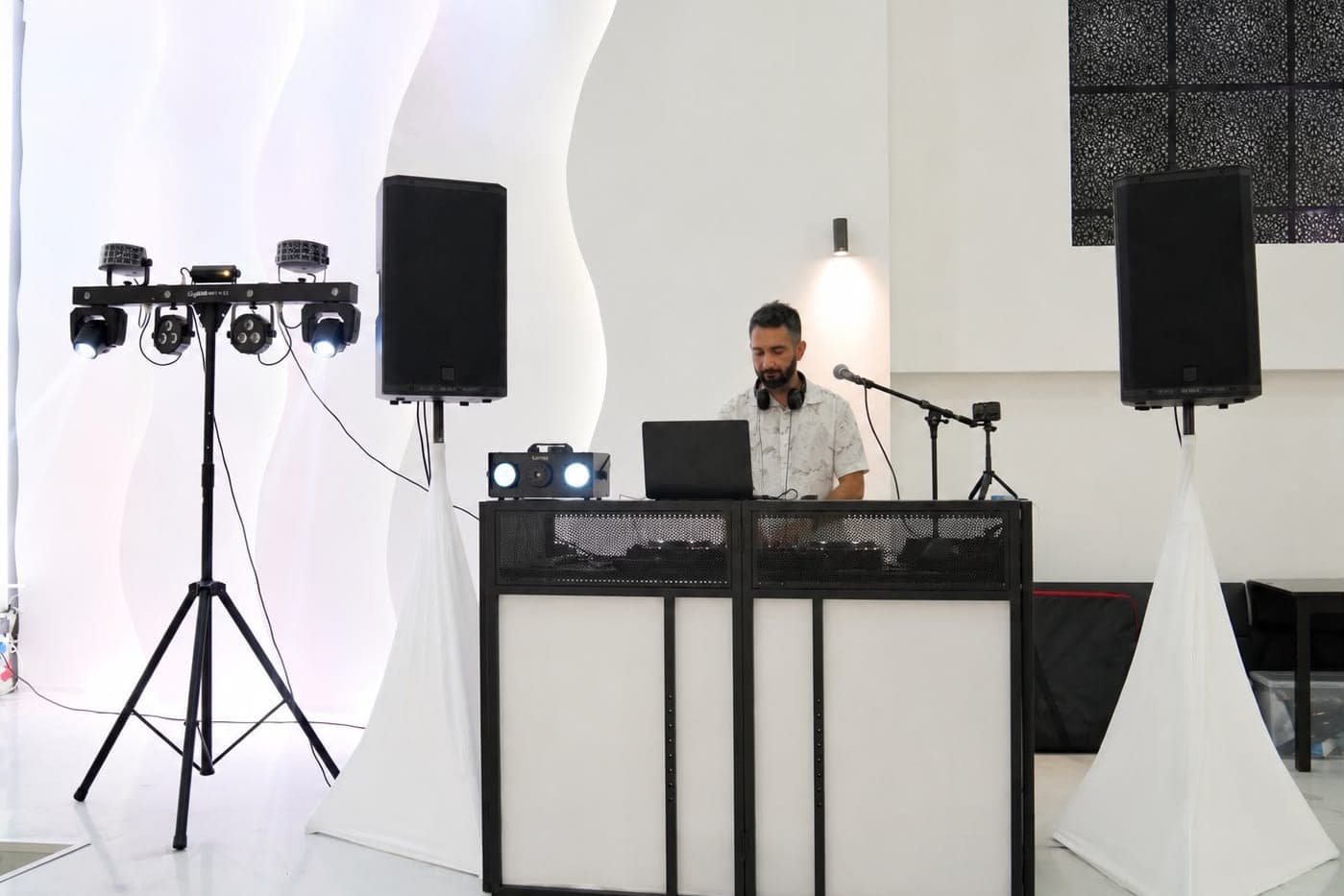
Legal
Noise protection and closing times in Baden-Württemberg
Baden-Württemberg is one of two German states with a real statutory closing time (normally 3–6am, 5–6am on nights before Sat/Sun) — for weddings, it can be adjusted via an application to the local regulatory office. This article is orientation from public sources, not legal advice.
September 01, 20266 min read

Planning
How to find the right wedding DJ: the checklist
A good wedding DJ can be recognised by checkable criteria, not the nicest Instagram reel: verifiable experience, a personal planning call, owned equipment, a written contract and a no-go list that actually gets honoured. This checklist makes candidates comparable.
August 04, 20266 min read
Not ready to stop reading?
Let's talk about your date
Check availability for your date with no obligation — reply within 24 hours.
Check your date & get a quote