Turkish Wedding
Planning a nişan (Turkish engagement): order, ring ceremony and music
The nişan is a celebration in its own right, calmer and more family-focused than the wedding. This guide covers the typical sequence from kız isteme to takı, a checklist for music and microphones, and the most common pitfalls.
By DJ VeysPublished on October 15, 20265 min read
Photo coming soon
The nişan: when two families meet officially
The nişan — the engagement celebration — is a celebration in its own right in Turkish and German-Turkish families, not just a prelude to the wedding. It is the moment the couple and both families publicly commit to one another. In Germany it takes place weeks or months before the wedding depending on the family, sometimes at home with a small circle, sometimes in a hired hall with several hundred guests. Planning it like a small wedding misses what defines it: it is calmer, more personal and more focused on the families.
What often comes before the nişan
Many families know two steps ahead of the celebration, which vary by region and family:
- Kız isteme (asking for the bride's hand): the groom's family visits the bride's family and formally asks for her hand. A well-known custom is serving the groom coffee with salt instead of sugar, as a friendly test.
- Söz (the promise): the two families agree on the union, sometimes in a small meeting of its own, sometimes only on the day of the nişan.
Not every family follows these steps, and some combine everything into one evening. For planning, that means: clarify early which parts belong in your family and whether they should happen on the same evening.
The typical running order of a nişan
There is no binding plan. A common outline looks like this:
- Welcome and arrival — guests are greeted, quiet music plays in the background.
- The couple's entrance — often with a chosen song and clapping in time.
- Speech and prayer — an older family member says a few words, and in some families a short prayer follows.
- Ring ceremony — the rings are put on, often by an older family member. A red ribbon frequently links the two rings or the couple.
- Congratulations and takı — guests congratulate the couple and pin money or gold jewellery on them. With many guests this takes longer than expected.
- Food, cake, photos.
- Dancing — from the couple's first dance to group halay.
The ring ceremony and takı are the moments where music is not in the foreground but carries the room. That is exactly where clean sound decides whether everyone present can hear the words.
The music: calmer than at the wedding, but not incidental
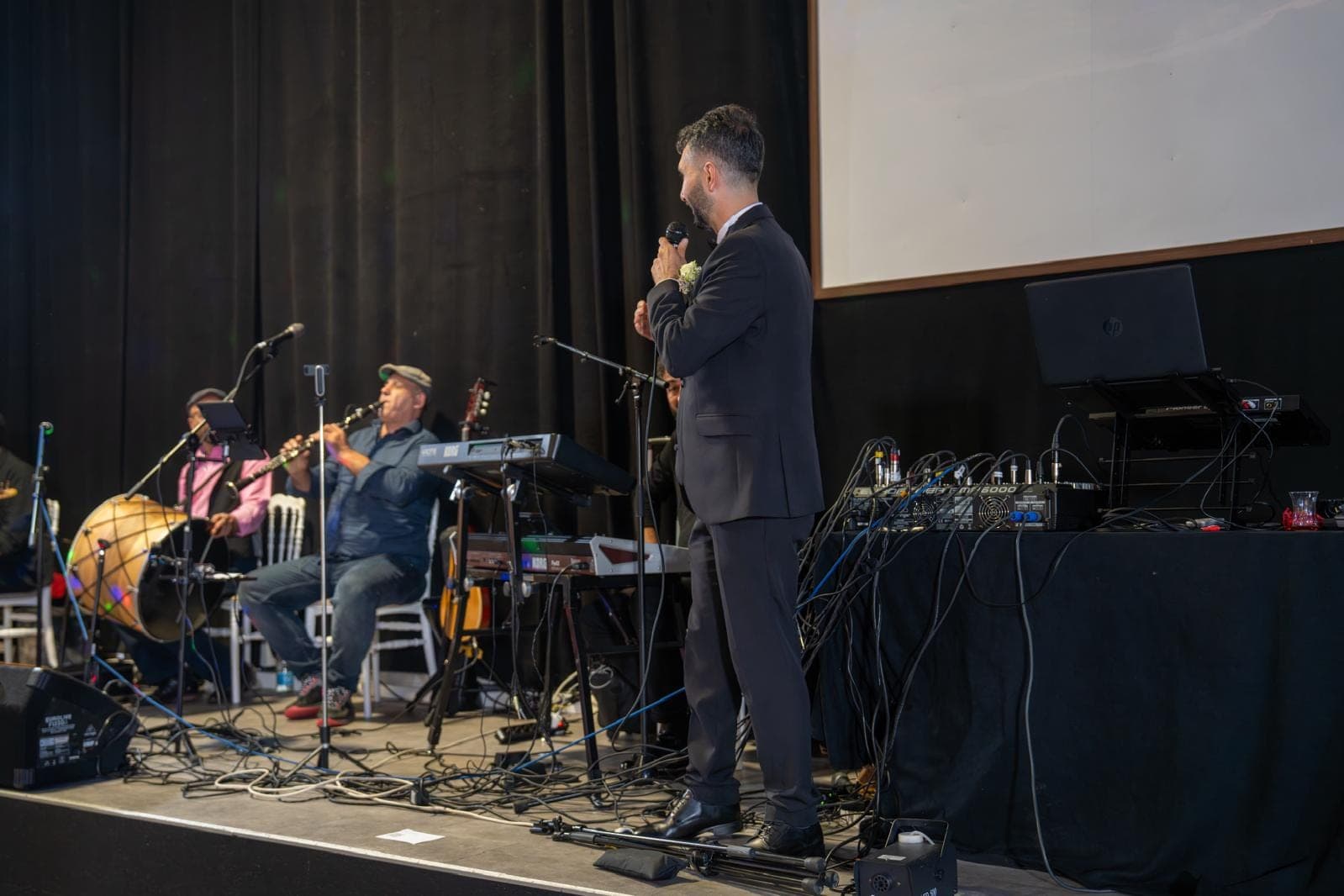
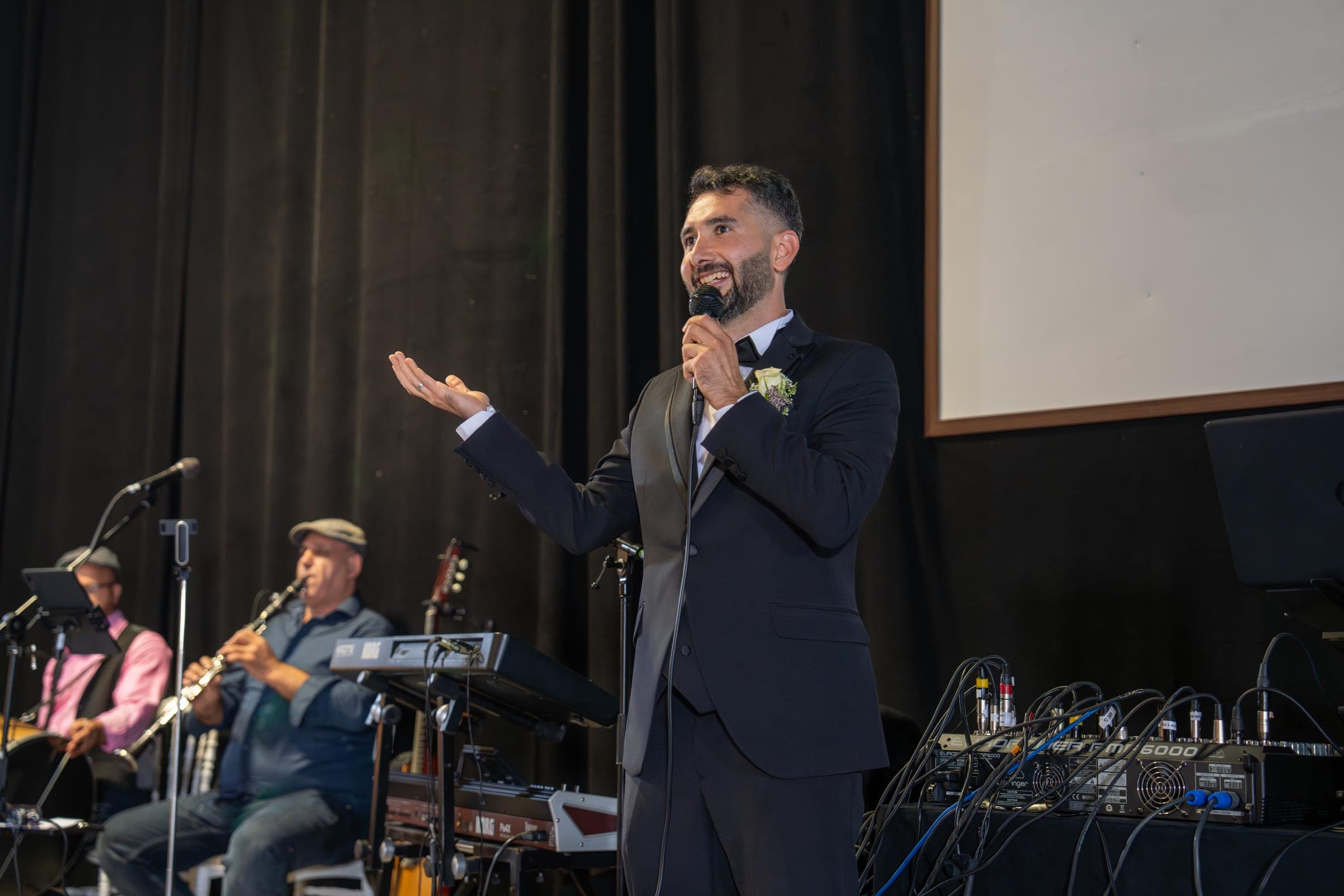
The nişan has two tempos: the dignified part (entrance, rings, takı) and the celebrating part. For the first, well-chosen pieces that are not too loud are enough. What matters is that speeches and the ring ceremony stay audible: a wireless microphone for everyone who speaks and a system that does not overdrive the room. For the second part the same applies as at the wedding: people who are meant to dance need a prepared repertoire of Turkish and German pieces, matched to the age groups present.
Checklist for the nişan
| Item | Question to settle |
|---|---|
| Entrance song | Which piece, exactly when, how long? |
| Ring ceremony | Who speaks, who puts the rings on, is there a prayer? |
| Microphone | Who needs a wireless microphone, and who makes the announcements — in German, Turkish or both? |
| Takı moment | How many guests, how long, what quiet music plays during it? |
| Food and cake | When is it served so the music does not compete with the plates? |
| Start of dancing | Who opens, and is a halay moment planned? |
| Volume and time | Is there a curfew in the hall or the residential area? |
| Photo and video | Are there moments that should deliberately be quiet? |
Common pitfalls
- A ring ceremony without a microphone. In a full hall the back half of the guests hears nothing, and the most important moment of the evening passes them by.
- Too many items. Including every custom leaves an evening with no room to breathe. Three moments done properly beat seven rushed ones.
- Unclear responsibility for announcements. If nobody is in charge, a pause appears before every item in which everyone looks at everyone else.
- One language for a mixed audience. On German-Turkish guest lists not everyone understands both languages equally well — bilingual announcements solve that.
- Technology and space not checked in advance. Power, setup space and neighbours are often the real bottlenecks, in a living room and in a community hall alike.
Thinking nişan and wedding together
The nişan does not have to be the small version of the wedding, but the two evenings can know each other. A song heard for the first time at the nişan can return at the wedding. And anyone planning kına gecesi, nişan and wedding separately should make sure the playlists do not tell the same story three times. The guide to the Turkish wedding in Germany gives an overview of the whole sequence.
How much time to allow
As a rough guide that varies a lot between families: welcome and arrival just under an hour, entrance and ring ceremony 20 to 40 minutes, congratulations and takı about as long again depending on the number of guests, then the meal and the dancing. Build in a buffer — rituals with many participants almost always run longer than planned.
Conclusion
A good nişan lives on a few well-prepared moments: an entrance that carries, a ring ceremony everyone can follow, and a transition into dancing that does not start from nothing. Anyone who agrees these three points with the DJ or host in advance has done most of the planning. DJ Veys also accompanies engagements and henna nights and hosts in German, Turkish and English. For coordinating music and running order, a free enquiry for your date is a good next step.
Further reading
You might also like
Turkish Wedding
Turkish wedding in Germany: running order, music and timing
A Turkish or German-Turkish wedding in Germany rarely follows the standard German running order: a denser ceremony, a longer dance programme, and its own rituals like kına gecesi and the ring ceremony. This guide explains the typical framework and an example timeline.
August 11, 20267 min read

Turkish Wedding
Planning a kına gecesi (henna night): the practical guide
The kına gecesi has its own rhythm: a calm ritual, then an abrupt mood shift into the party. This guide covers the classic running order, a planning checklist, and the most common timing mistakes.
August 11, 20266 min read
Turkish Wedding
German-Turkish wedding: two families, one evening
At German-Turkish weddings, the real challenge is rarely the music alone — it's differing expectations around running order and pace. This guide shows where expectations typically diverge and how to build an evening that works for both sides.
September 08, 20266 min read
Not ready to stop reading?
Let's talk about your date
Check availability for your date with no obligation — reply within 24 hours.
Check your date & get a quote