blog.categories.islamische-hochzeit
Planning an Islamic wedding: running order, dua and the party in one evening
An Islamic wedding is an evening with two parts — the religious frame and the celebration that follows. This guide shows the order that holds up in practice, the sound the religious part needs, and the five mistakes that keep recurring.
By DJ VeysPublished on July 31, 2026Updated on August 27, 20267 min read
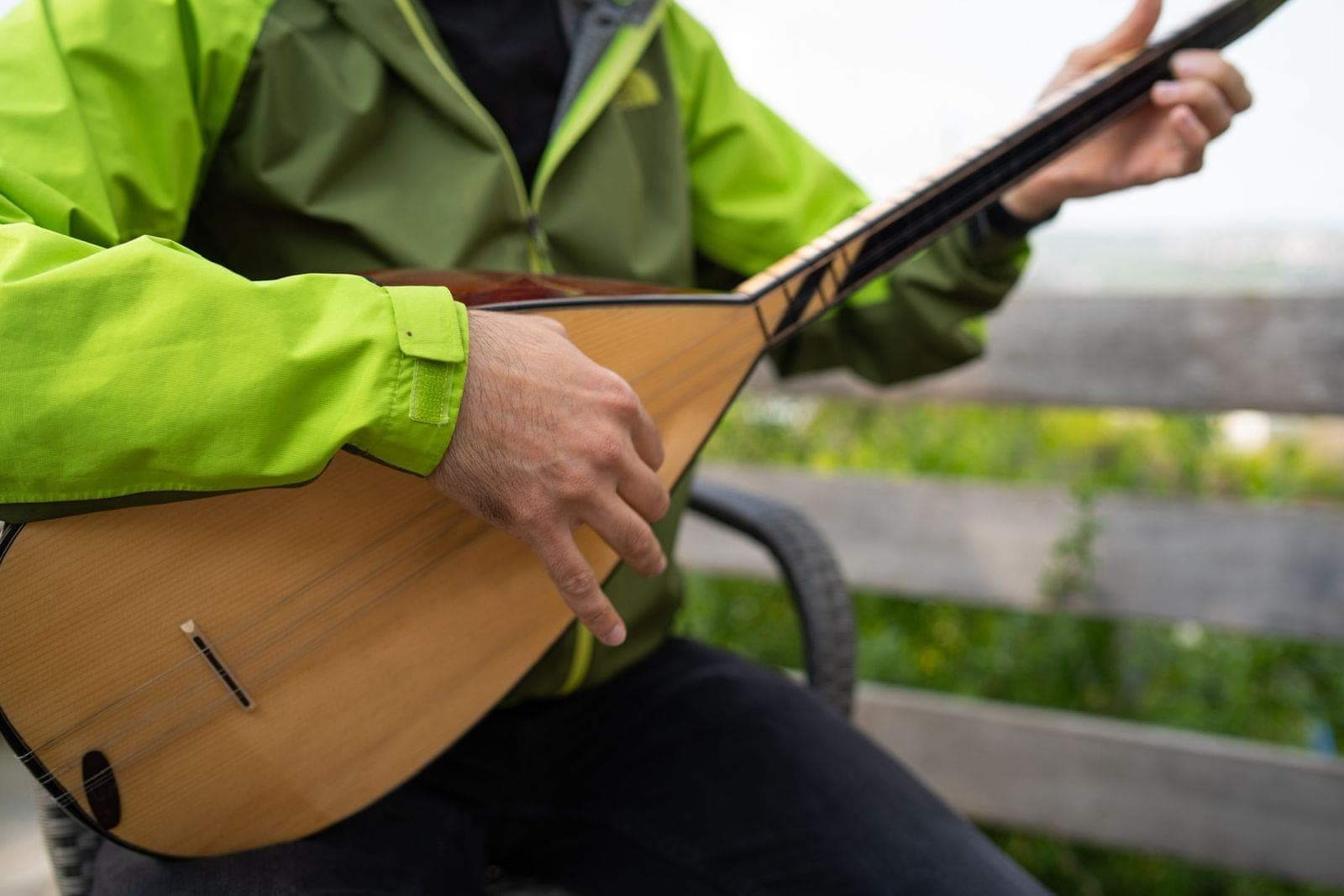
Two celebrations in one evening — and why that is the heart of the planning
An Islamic wedding puts a task in front of couples that a purely civil celebration never raises: two very different moods have to coexist in a single evening. The religious part calls for quiet, attention and intelligibility. The celebration afterwards calls for energy, volume and a full dance floor. The two are entirely compatible — but not by accident. It is a question of the running order.
The most common planning mistake is therefore not a musical one but an organisational one: the religious part and the party are thought of separately, often even booked separately, and nobody is explicitly responsible for the transition. That is exactly where the evening tips over — the music cuts off mid-track, guests do not know whether to stay seated, and after the dua the room simply stalls because nobody moves it on.
Who does what: settle the roles early
Before anyone talks about clock times, a plain list of who takes which part is worth more:
| Task | Usually handled by | What to settle early |
|---|---|---|
| Quran recitation | A hoca, a family member — or the DJ/host himself, if he recites | Exactly who, and for how long |
| Dua | Usually the same person as the recitation | Its slot in the running order, not a vague "before dinner" |
| Ilahi | Performed live or played back | Live or playback, with or without saz |
| Announcements and transitions | Hosting | In which languages, and who gets the room moving again |
| Sound for the religious part | Audio and lighting | Own microphone, level, no effects |
The fourth row is the one most often overlooked and the one that decides the most. A recitation with no prior announcement everyone can follow catches part of the guests unprepared — and a room where half the party is still at the buffet does not do the moment justice.
The order that holds up in practice
There is no binding sequence, and families handle it differently. What does prove reliable again and again in practice: the religious part early in the evening, before dinner, not between two rounds of dancing.
Three practical reasons support that. First, the guests are all present and still receptive. Second, the volume of the evening is low at that point anyway, so the transition is a small one. Third — and this matters most — the energy after it only has to rise. Placing the religious part in the middle of a running dance set breaks that set, and the mood then has to be built a second time.
Sound: the difference between heard and understood
Different technical rules apply to the religious part than to the rest of the evening. They are unspectacular, but they are not negotiable:
- Its own microphone, properly levelled — not whichever handheld the host happens to be holding.
- No reverb, no effects. What flatters a voice in the dance set makes a recitation harder to follow.
- A markedly lower level than the dance set — the goal is intelligibility everywhere in the room, not volume.
- The level is set at the soundcheck, not in the moment. Anyone reaching for a fader during the recitation is already too late.
Music: what comes before, what comes after
The music before the religious part should be quiet, instrumental and unobtrusive — and it is faded out, not cut. A clean fade over a few seconds is the difference between a transition and an interruption.
After the dua, an intermediate step works better than jumping straight into dance music. Ilahi — performed live, with saz on request — is exactly that step: not yet a party, no longer a devotion. Skip that block and you are asking the room to change mood in a single second, which rarely works.
Türk Sanat Müziği suits the dinner phase for the same reason: calm enough for conversation, but never arbitrary.
Celebrating without alcohol — a question that is not one
Many couples ask whether an alcohol-free celebration is "harder to get going". The experience from the German-Turkish scene, where it is the norm, says clearly no. The dance floor lives off the repertoire, the timing and the hosting — not off the bar. Anyone claiming otherwise usually has a repertoire problem, not a drinks problem.
Multilingual hosting: where the mood is made or lost
With a guest list spanning two language worlds, the hosting decides in large part whether everyone feels addressed. What matters is less that every sentence is said twice than that both groups know what is happening right now — especially before the religious part. An announcement that effectively excludes a whole group of guests costs noticeable atmosphere, however good the music is.
The five mistakes that keep recurring
- No fixed time for recitation and dua — only a vague "before dinner".
- Two separate suppliers with no shared running order, each with their own idea of timing.
- Music cut rather than faded, which makes the transition feel abrupt and unintentionally disrespectful.
- No intermediate step between dua and dance floor, leaving the room at a standstill.
- The level for the recitation searched for in the moment instead of set at the soundcheck.
What this means for choosing a supplier
The decisive question to ask a provider is not "do you play Turkish music too", but: who owns the transition? If recitation, dua, ilahi, hosting and the DJ set come from one source, coordinating several timetables disappears — and with it the most common source of error in the evening.
At DJ Veys these building blocks genuinely sit with one person: Veysel Durmuş performs the Quran recitation himself, ilahi is played live, hosting runs in German, Turkish and English, and the same person takes over the DJ set afterwards. A detailed example running order with clock times is on the Islamic wedding page.
Conclusion
An Islamic wedding is not a special case demanding particular compromises — it is an evening with two parts that needs one considered running order rather than two separate bookings. Set the religious part early, prepare the sound for it, and shape the transition deliberately, and you get both at full quality: a dignified frame and a full dance floor.
Further reading
You might also like
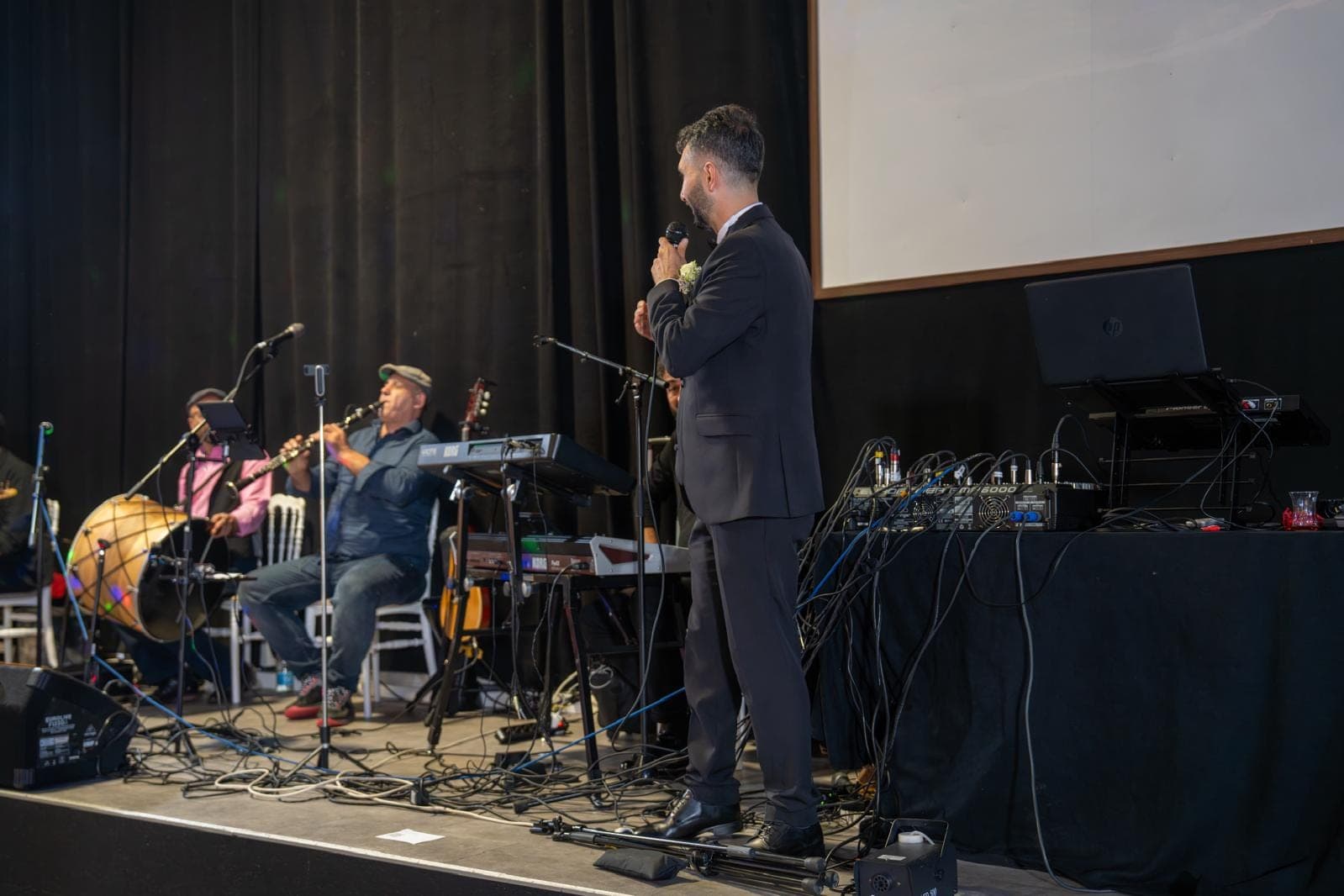
Turkish Wedding
Turkish wedding in Germany: running order, music and timing
A Turkish or German-Turkish wedding in Germany rarely follows the standard German running order: a denser ceremony, a longer dance programme, and its own rituals like kına gecesi and the ring ceremony. This guide explains the typical framework and an example timeline.
August 11, 20267 min read
Planning
How a DJ-led wedding runs: a realistic timeline
A reliable wedding timeline lives on deliberate buffers, not minute-by-minute planning. This guide shows an example timeline from 1pm to 2am, the three most common timing mistakes, and how the running order shifts for Turkish weddings.
September 08, 20268 min read

Planning
How to find the right wedding DJ: the checklist
A good wedding DJ can be recognised by checkable criteria, not the nicest Instagram reel: verifiable experience, a personal planning call, owned equipment, a written contract and a no-go list that actually gets honoured. This checklist makes candidates comparable.
August 04, 20266 min read
Not ready to stop reading?
Let's talk about your date
Check availability for your date with no obligation — reply within 24 hours.
Check your date & get a quote