Turkish Wedding
Gelin alma: the bride's collection at a Turkish wedding, and its music
The bride's collection is the first big moment of the wedding day: convoy, music, red ribbon, farewell. This guide shows what commonly belongs to it, what to watch for with equipment, neighbours and traffic, and where planning goes wrong.
By DJ VeysPublished on October 15, 20265 min read
Photo coming soon
Gelin alma: when the wedding goes out onto the street
At many Turkish weddings the wedding day does not begin in the hall but at the bride's front door. The groom's family comes to fetch her: gelin alma (collecting the bride) or, from her family's side, gelin çıkarma (leading the bride out of the house). The moment is short but dense — a farewell to parents and siblings, music in the street, photos, often tears and laughter at the same time. In Germany it is celebrated in full, shortened or deliberately left out, depending on the family. Anyone planning it should know which parts are custom, which need organisation, and where the music belongs.
What often happens at the bride's collection
There is no fixed running order; region and family decide a lot. These elements are common:
- The convoy. The groom's family arrives in a column of cars, often decorated.
- The music on arrival. Depending on the family, davul and zurna, a marching band or music from a mobile system announce the arrival.
- The door. In some families the way to the bride is playfully blocked until the other side's guests slip something over.
- The red ribbon. The bride's father or a brother often ties a red ribbon around her waist, as a sign of protection and blessing.
- The farewell. The bride leaves the house with her family; many families have a particular, often very emotional song for it.
- The journey to the next place: the civil ceremony, the photo shoot or the hall.
Not everything belongs everywhere — and it is perfectly fine to adopt only some elements.
Music and technology on the street
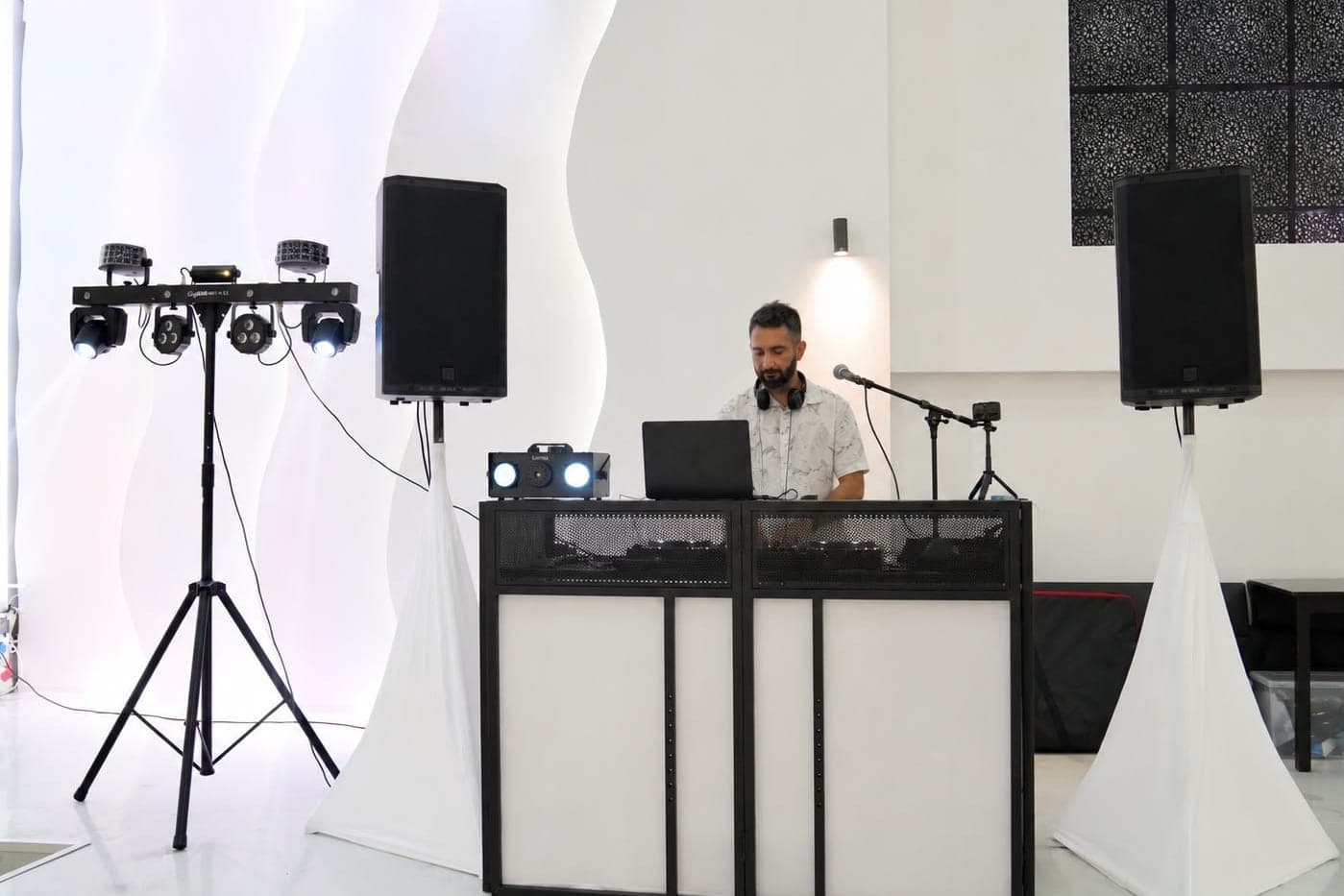
Outside, different rules apply from the hall. Davul and zurna carry across the whole street and are loud enough without amplification. A mobile system, by contrast, needs power (battery or a socket nearby), room to set up and wind protection for the microphones. Ask in advance whether the music should be live, from the DJ or mixed, and who gives the cue at the decisive moment, the bride's farewell. If that is not agreed, the wrong song plays in the middle of the farewell — or none at all.
Neighbours, noise and traffic
A collection with music and a convoy takes place in public space. That is unproblematic as long as it stays short and the neighbours know beforehand. Three points avoid the most common trouble:
- Advance notice. A short note or a word with the neighbours beforehand costs nothing and saves an argument later.
- Time. On Sundays and during the midday quiet period, music in the street and honking are much more sensitive than on a Saturday afternoon.
- Traffic. Convoys and honking are subject to road traffic rules. Anyone who wants to block a street or register a procession should clear it with the competent authority beforehand — rules and responsibilities differ from city to city.
For noise and curfews at the celebration itself, the Baden-Württemberg guide gives an overview.
Checklist for the bride's collection
| Item | Question to settle |
|---|---|
| Time and duration | When does it start, how long may it last, what follows? |
| Music | Live, DJ or both — and who gives the cue for the farewell? |
| Farewell song | Which piece, which version, how long? |
| Power and space | Where does the system stand, is there a socket, is there enough room? |
| Convoy | How many vehicles, where does the journey go, who leads? |
| Neighbours | Do they know, are there quiet hours to observe? |
| Photo and video | Where do the photographers stand without being in the way? |
| Handover | Who tells the group when it is time for the next item? |
Common pitfalls
- The farewell has no director. Without a clear cue, the most emotional moment of the day passes without music or with the wrong song.
- Too long a pause before moving on. If nobody knows what follows after the farewell, groups drift apart and the schedule slips by half an hour.
- Too much equipment for too little space. A system that blocks the pavement quickly becomes a problem.
- Uncoordinated music. Live musicians and the DJ play against each other if nobody clarifies beforehand who plays when.
- No coordination with the rest of the day. The collection affects the ceremony, the photos and admission to the hall — a buffer of at least half an hour is rarely wasted.
How much time to allow
As a rough guide that varies noticeably between families: 30 to 60 minutes for arrival, ritual and farewell, plus travel time to the next place. What matters is less the exact figure than a buffer that stops delays from carrying over into the ceremony, the photos and admission to the hall.
Conclusion
The bride's collection is not a side show but the first big moment of the day — and the one where music and organisation have to work together most visibly. Anyone who settles the cue, power, neighbours and time buffer in advance gets an opening everyone remembers. DJ Veys coordinates with live musicians and davul-zurna players for entrances and ceremonies and hosts in German, Turkish and English. For coordinating with the rest of your day, a free enquiry for your date is a good next step.
Further reading
You might also like

Turkish Wedding
Davul-zurna, halay and Roman Havası — what gets played when
Davul-zurna, halay and Roman Havası are often mixed up, but they refer to an instrument pair, a dance and a musical style. This guide explains the differences and shows when each fits into the running order.
September 15, 20265 min read
Turkish Wedding
Turkish wedding in Germany: running order, music and timing
A Turkish or German-Turkish wedding in Germany rarely follows the standard German running order: a denser ceremony, a longer dance programme, and its own rituals like kına gecesi and the ring ceremony. This guide explains the typical framework and an example timeline.
August 11, 20267 min read
Legal
Noise protection and closing times in Baden-Württemberg
Baden-Württemberg is one of two German states with a real statutory closing time (normally 3–6am, 5–6am on nights before Sat/Sun) — for weddings, it can be adjusted via an application to the local regulatory office. This article is orientation from public sources, not legal advice.
September 01, 20266 min read
Not ready to stop reading?
Let's talk about your date
Check availability for your date with no obligation — reply within 24 hours.
Check your date & get a quote